Cracking the Laundry Code
May 30, 2024
College Laundry 101: A Survival Guide
April 16, 2026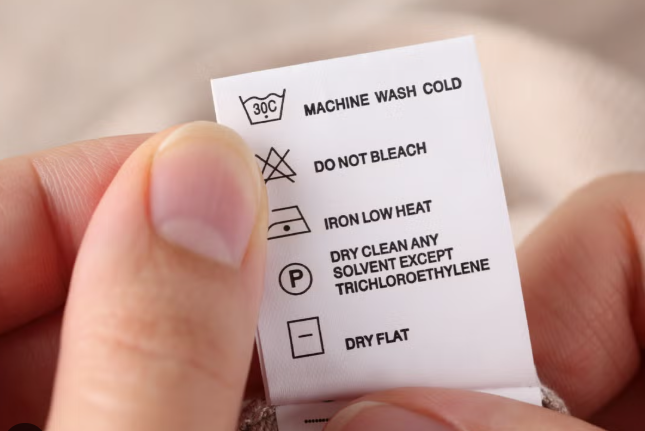
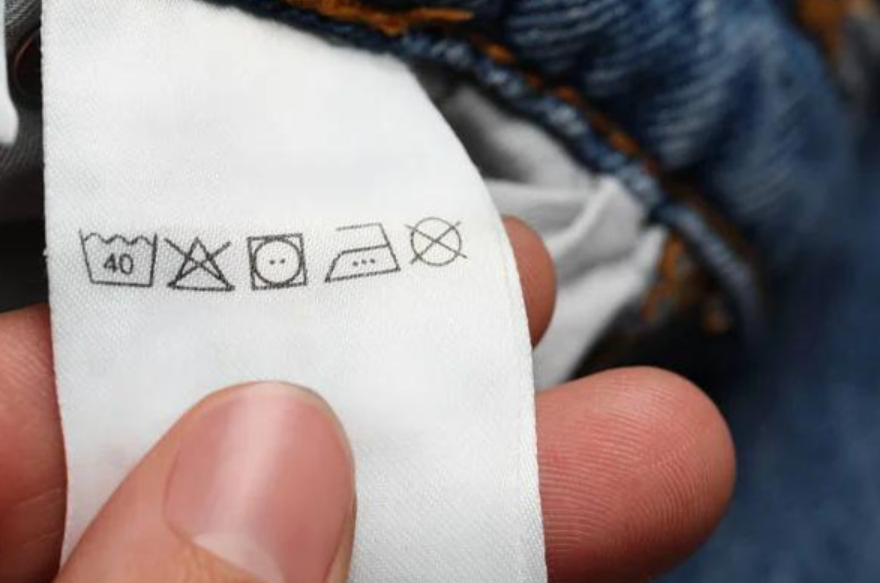
Have you ever looked at the tiny tag inside a shirt and wondered what all those strange symbols mean? A little tub, triangle, square, iron, or circle can look like a secret code—but these laundry symbols are actually a simple system designed to tell you how to wash, dry, bleach, iron, and professionally clean your clothes.
Understanding clothing care labels can help prevent common laundry problems such as shrinking, fading, stretching, fabric damage, and accidental discoloration. Whether you’re doing laundry at home or bringing your clothes to a laundromat, knowing how to read care labels is an important part of taking care of your clothing.
For customers of Tubs and Tumblers, understanding laundry symbols can also make it easier to decide which items can go into a standard wash-and-dry load and which garments require special attention.

What Are Laundry Symbols?
Laundry symbols, also called care symbols or clothing care symbols, are pictograms found on garment care labels. They provide instructions from the manufacturer about how an item should be cleaned and cared for.
The five primary categories are:
- Washing – represented by a washtub
- Bleaching – represented by a triangle
- Drying – represented by a square
- Ironing – represented by an iron
- Professional cleaning – represented by a circle
The symbols are generally presented in this order on care labels. Learning to recognize the basic shape is the first step toward decoding the entire label.
Laundry Symbol Cheat Sheet
| Symbol Shape | What It Means |
|---|---|
| 🛁 Washtub | Washing instructions |
| △ Triangle | Bleaching instructions |
| □ Square | Drying instructions |
| ♢ Iron | Ironing instructions |
| ○ Circle | Professional cleaning |
| X through symbol | Do not perform that action |
| Dots | Temperature/heat level |
| Lines underneath | Gentler wash or drying cycle |
The most important trick is this: learn the shape first, then look for dots, lines, or an X.
Washing Symbols: How Should You Wash It?
The washtub symbol is probably the most important laundry symbol you’ll encounter.
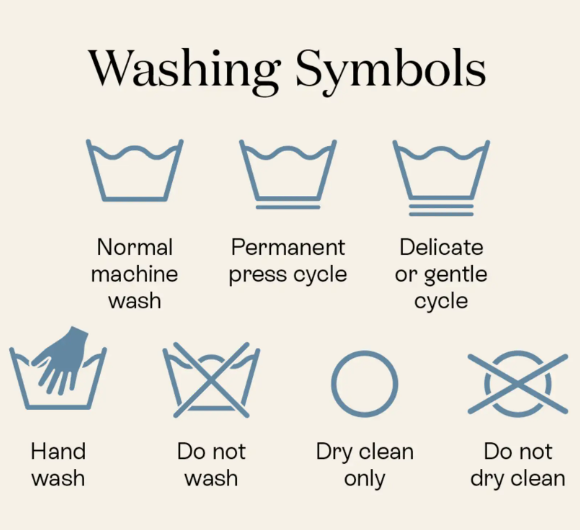
It tells you whether the garment can be machine washed, hand washed, and sometimes the recommended water temperature.
A plain washtub
A washtub without additional markings generally means the item can be machine washed according to the instructions.
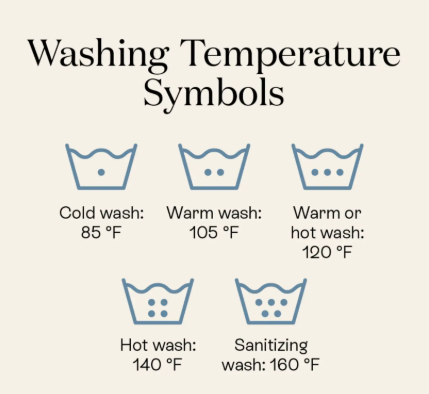
A washtub with dots
Dots indicate temperature.
Generally:
- 1 dot: Cold or low-temperature wash
- 2 dots: Warm wash
- 3 dots: Hot wash
Some labels use actual temperatures instead of dots, such as 30°C, 40°C, or 60°C.
When you’re unsure, choosing a cooler temperature is often the safer option for many everyday garments. Always give the garment’s specific care label priority.
A washtub with one line underneath
One line underneath the tub generally indicates a permanent-press or gentler cycle.
A washtub with two lines underneath
Two lines generally indicate an even more delicate cycle.
These lines matter because a garment may be washable but still require a gentler mechanical action.
Hand inside the tub
A hand-wash symbol means the garment should be hand washed rather than placed through a standard machine wash cycle.
This symbol is commonly associated with delicate fabrics and garments that need gentle handling.
X over the washtub
An X means do not wash.
If you see this symbol, don’t put the garment through a normal washing machine cycle.
Bleaching Symbols: Can You Use Bleach?
The triangle is your bleach symbol.
This is one of the symbols you definitely don’t want to ignore.
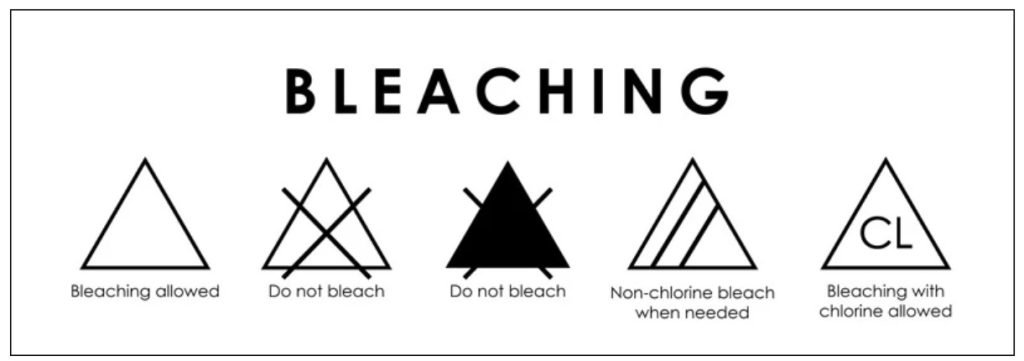
Plain triangle
A plain triangle traditionally means bleach may be used.
Triangle with two diagonal lines
This indicates that non-chlorine or color-safe bleach may be appropriate.
Crossed-out triangle
This means do not bleach.
If you see the crossed-out triangle, skip bleach entirely.
Bleach can permanently damage some fabrics and dyes, so checking this symbol before adding bleach is important.
Laundry tip: Don’t assume that because a garment is white, bleach is automatically safe. The care label should always be your guide.
Drying Symbols: Can It Go in the Dryer?
The square symbol represents drying instructions.
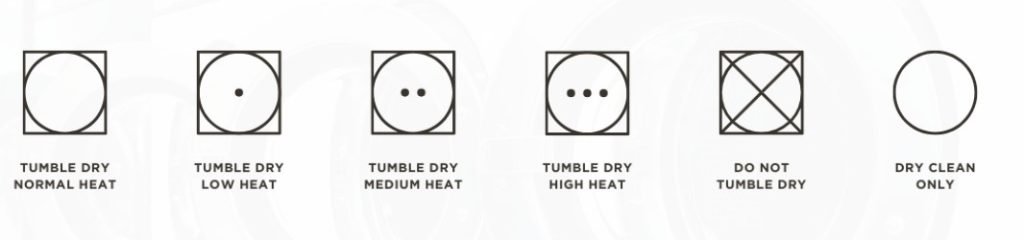
This category can be particularly important because excessive dryer heat can cause shrinking, fading, elastic damage, and other problems.
Square with a circle inside
A square containing a circle means tumble drying is permitted.
You’ll then want to check for dots inside the circle.
One dot
Use low heat.
Two dots
Use medium heat.
Three dots
Use high heat.
As with washing symbols, more dots generally mean more heat.
Crossed-out square with circle
This means do not tumble dry.
Instead, the label may provide an alternative drying method.
Other Drying Symbols You May See
Not every garment is designed to go into a dryer.
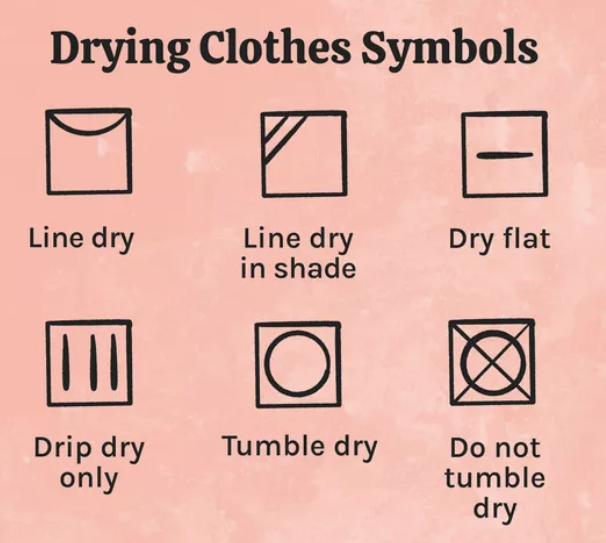
You may see several different variations of the square symbol.
Line dry
A square with a curved line near the top generally indicates line drying.
Drip dry
Vertical lines inside the square indicate drip drying.
Dry flat
A horizontal line can indicate that the garment should be dried flat.
This can be especially important for garments that could stretch or lose their shape when hung.
Dry in the shade
Some care labels indicate that a garment should be dried away from direct sunlight.
This can help protect certain fabrics and dyes from excessive exposure.
Ironing Symbols: How Much Heat Can You Use?
The iron symbol tells you whether and how the garment can be ironed.
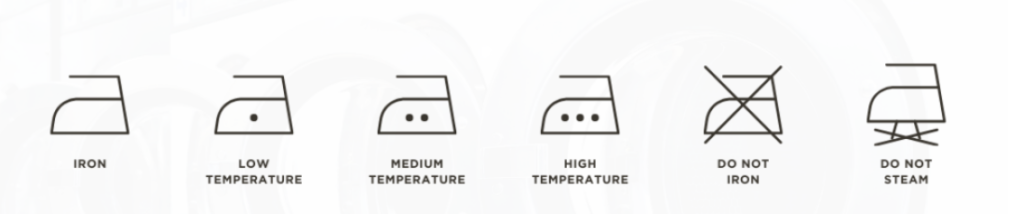
Just like the dryer symbol, dots indicate heat level.
One dot
Use low heat.
Two dots
Use medium heat.
Three dots
Use high heat.
Crossed-out iron
This means do not iron.
If a garment says not to iron it, don’t assume that a quick pass with the iron will be harmless. Heat can damage certain synthetic fabrics, coatings, prints, and delicate materials.
Some labels may also provide additional information about steam.
When ironing, always start with the lowest appropriate setting and follow the manufacturer’s instructions.
Dry-Cleaning Symbols: What Does the Circle Mean?
A circle generally represents professional cleaning instructions.

If you see a circle on a care label, don’t automatically assume that the garment must be dry cleaned. The markings inside or around the circle can provide additional information about the appropriate professional cleaning process.
Plain circle
A circle generally indicates professional cleaning is permitted.
Circle with letters
Letters inside the circle can provide information to professional cleaners about the cleaning process or solvent that may be used.
Crossed-out circle
This means do not dry clean.
If you’re unsure about a complicated professional-cleaning symbol, it’s better to ask a professional rather than guessing.
The Most Important Laundry Symbol: The X
If there’s one laundry symbol rule you should memorize, it’s this:
An X generally means “Do Not.”
For example:
- 🚫 Crossed-out tub = Do not wash
- 🚫 Crossed-out triangle = Do not bleach
- 🚫 Crossed-out dryer symbol = Do not tumble dry
- 🚫 Crossed-out iron = Do not iron
- 🚫 Crossed-out circle = Do not dry clean
An X is essentially the garment’s way of saying, “Don’t do that!”
What Do the Dots on Laundry Symbols Mean?
Dots are another important part of understanding clothing care labels.
In general:
More dots = more heat.
This applies across several types of care symbols.
Washing
- 1 dot = cooler temperature
- 2 dots = warmer temperature
- 3 dots = hotter temperature
Drying
- 1 dot = low heat
- 2 dots = medium heat
- 3 dots = high heat
Ironing
- 1 dot = low heat
- 2 dots = medium heat
- 3 dots = high heat
The exact temperature can vary by labeling system and garment, so treat the dots as a guide and check for any written instructions on the label as well.
What Do the Lines Under Laundry Symbols Mean?
Lines underneath a washing or drying symbol generally indicate that the garment needs gentler treatment.
Think of the progression this way:
No line → Normal cycle
One line → Gentler cycle
Two lines → Very gentle/delicate cycle
This is particularly important for clothing made from delicate materials or garments that could be damaged by aggressive agitation.
Why Reading Care Labels Can Save Your Clothes
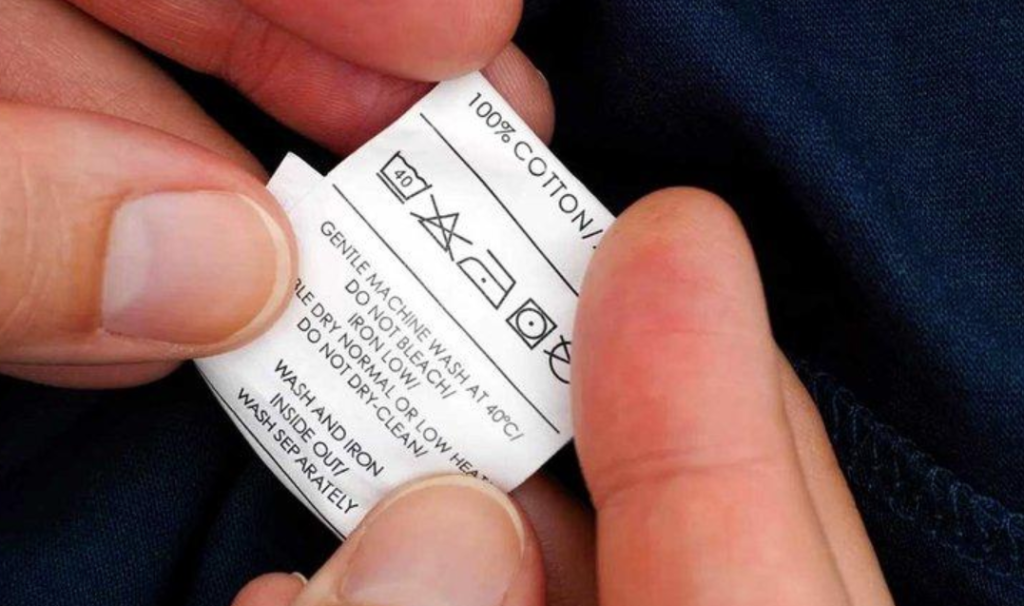
Ignoring a care label can turn an expensive piece of clothing into a laundry-day disaster.
Using the wrong washing temperature can contribute to shrinking, fading, or fabric damage. Using excessive dryer heat can also affect certain fabrics and elastic materials.
For example, imagine purchasing a new sweater that says:
Hand Wash → Do Not Bleach → Dry Flat → Iron Low
If you throw that sweater into a hot wash cycle and then put it in a high-heat dryer, you could end up with a garment that looks and fits very differently.
Taking 10 seconds to check the label before washing can help you avoid that mistake.
How to Read a Laundry Care Label Step by Step
The next time you encounter a confusing clothing tag, follow these steps.
Step 1: Find the care label
Look inside the collar, along a side seam, or near the bottom hem.
Step 2: Identify the symbols
Look for the washtub, triangle, square, iron, and circle.
Step 3: Check for an X
An X means don’t perform that particular action.
Step 4: Look for dots
Dots generally tell you the recommended heat level.
Step 5: Look for lines
Lines underneath a symbol generally indicate a gentler cycle.
Step 6: Read any written instructions
Some garments include additional instructions such as:
- Wash separately
- Wash with like colors
- Turn inside out
- Do not wring
- Use mild detergent
- Remove promptly
- Do not use fabric softener
Don’t rely solely on the symbols when written instructions are also provided.
Laundry Care Labels and Laundromat Washing
Care labels become particularly useful when you’re washing large loads at a laundromat.
At Tubs and Tumblers, customers can use commercial-size washers and dryers, making it possible to handle everything from everyday clothing to larger laundry loads.
However, larger machines don’t mean every garment should automatically be washed on the hottest setting.
Before starting a load:
- Check the care labels.
- Separate delicate items.
- Separate items requiring different temperatures.
- Check for “do not tumble dry” instructions.
- Select the appropriate cycle.
- Avoid excessive heat when the label doesn’t call for it.
If you’re using a wash-dry-fold or drop-off laundry service ,make sure to communicate any special care requirements when dropping off your items.
For customers in Wayne and surrounding communities—including Canton, Westland, Romulus, Belleville, and Van Buren Township—professional laundry services can also be a convenient option when you don’t have the time to handle large loads yourself.
7 Common Laundry Care Label Mistakes
1. Ignoring the label
The care label is there for a reason. Don’t assume every T-shirt, towel, or pair of pants can be washed the same way.
2. Automatically choosing hot water
Hot water isn’t always the best choice. Some fabrics and dyes are better suited to cooler temperatures.
3. Using high dryer heat for everything
High heat can be unnecessarily harsh on some garments.
4. Bleaching without checking the triangle
Always check the bleach symbol before using bleach.
5. Mixing delicate clothing with heavy items
Even when everything is technically washable, heavy items such as towels and jeans can create more mechanical stress than delicate garments can handle.
6. Ignoring “do not tumble dry”
If the dryer symbol is crossed out, don’t put the item in the dryer.
7. Forgetting to check new clothes
One of the best habits you can develop is checking the care label before the first wash, especially with new or expensive clothing.
Quick Laundry Symbol Memory Trick
If you’re having trouble remembering all the symbols, use this simple system:
Tub = Wash
Triangle = Bleach
Square = Dry
Iron = Iron
Circle = Professional Clean
Then remember:
X = Don’t
Dots = Heat
Lines = Gentle
That’s most of what you need to know to decode the majority of everyday laundry care labels.
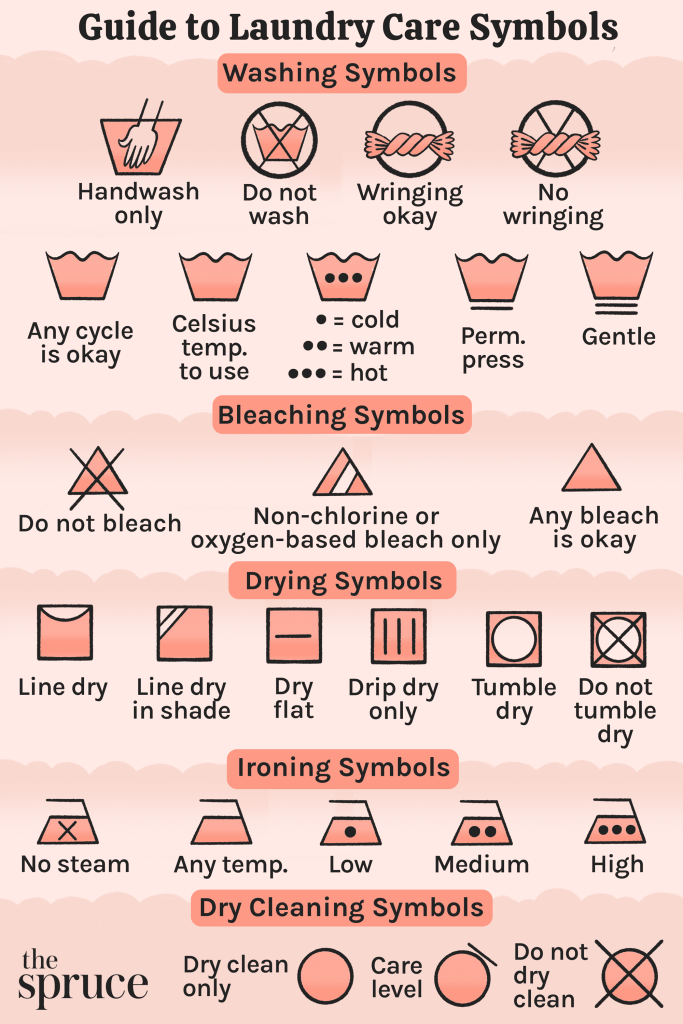
Laundry Symbols Cheat Sheet
Here’s a quick-reference infographic you can save or use as a reference when doing laundry.
Final Thoughts: Don’t Let Laundry Symbols Confuse You
Laundry care labels may look complicated at first, but they’re much easier to understand once you learn the basic shapes.
Remember:
- Washtub = washing
- Triangle = bleach
- Square = drying
- Iron = ironing
- Circle = professional cleaning
- X = don’t do it
- Dots = heat level
- Lines = gentler treatment
Taking a few seconds to read a care label can help your clothing look better, fit better, and last longer.
And when laundry day becomes too time-consuming, Tubs and Tumblers can help make the process easier with convenient laundry services in Wayne and the surrounding communities.
Frequently Asked Questions About Laundry Symbols
What does the washtub symbol mean on clothing?
The washtub symbol provides washing instructions. Additional dots, lines, or markings tell you about water temperature and the recommended wash cycle.
What does an X over a laundry symbol mean?
An X generally means do not perform the action represented by that symbol. For example, an X over a dryer symbol means do not tumble dry the garment.
What do dots mean on laundry symbols?
Dots generally indicate temperature or heat. More dots typically mean a higher temperature.
What does a triangle mean on a clothing label?
A triangle represents bleaching instructions. A crossed-out triangle means the garment should not be bleached.
What does a square mean on a laundry label?
A square represents drying instructions. A square containing a circle specifically relates to tumble drying
What does a circle mean on a care label?
A circle generally relates to professional cleaning, including dry-cleaning instructions.
What does one line underneath a wash symbol mean?
One line underneath the washing symbol generally indicates a gentler or permanent-press cycle.
What does two lines underneath a wash symbol mean?
Two lines generally indicate a very gentle or delicate cycle.
Can I use hot water if my clothing doesn’t have a temperature listed?
It’s best to follow the care label and avoid assuming that hot water is appropriate.
When in doubt, a cooler wash may be less aggressive, but the garment’s specific instructions should take priority.
Why do some clothes say “do not tumble dry”?
Some fabrics, finishes, elastic materials, prints, and garments can be damaged by dryer heat or tumbling. If the tumble-dry symbol is crossed out, follow the recommended alternative drying method.
What should I do if I don’t understand a laundry symbol?
Start by identifying the basic shape—tub, triangle, square, iron, or circle—and then look for dots, lines, or an X. If the label contains unusual professional-cleaning instructions, consider consulting a professional cleaner.
Should I read care labels before every wash?
You don’t necessarily need to study every label before every load, but it’s especially important to check new clothing, delicate garments, expensive items, and anything with special care instructions.