Laundry Hacks That Actually Work (And Ones That Don’t)
September 5, 2026
Laundry is one of those household expenses that can quietly add up. Between detergent, water, electricity or gas, dryer sheets, appliance maintenance, laundromat costs, and the occasional ruined garment, doing laundry can cost more than many people realize.
The good news? You don’t have to sacrifice clean clothes to lower your laundry expenses.
By changing a few habits—such as washing fuller loads, using cold water when appropriate, measuring detergent correctly, reducing drying time, and choosing efficient laundry equipment—you can make your laundry routine more affordable.
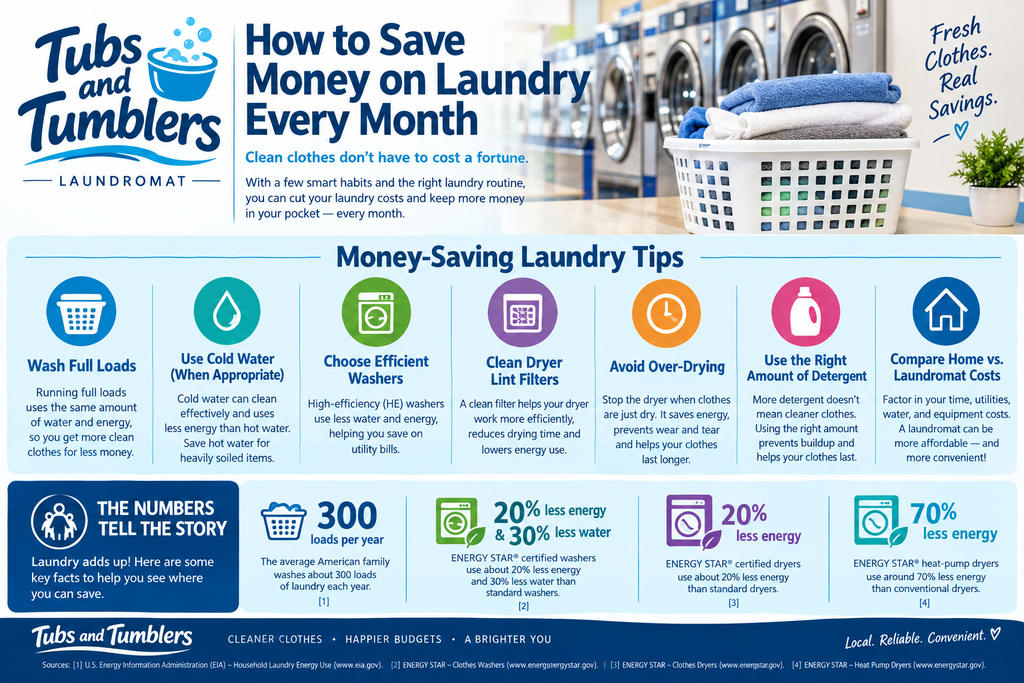
According to ENERGY STAR, the average American family washes approximately 300 loads of laundry each year. ENERGY STAR-certified washers use about 20% less energy and 30% less water than standard models.
That means even small savings per load can add up over an entire year.
Whether you do laundry at home or visit a laundromat such as Tubs and Tumblers in Wayne, MI, here are practical ways to keep more money in your pocket.
1. Wash Full Loads Whenever Possible
One of the easiest ways to reduce your laundry costs is to stop running partially filled washing machines.
Your washer uses roughly the same amount of energy for a cycle regardless of whether the load is relatively small or full. ENERGY STAR specifically recommends running full loads whenever possible.
For example, instead of washing three small loads throughout the week, consider combining appropriate clothing into fewer, properly sized loads.
The key is “full,” not “overstuffed.”
Clothes need enough room to move freely through the water and detergent. An overloaded machine can prevent clothes from getting properly clean and may put unnecessary stress on the appliance.
Money-saving rule: Fill the washer efficiently while leaving enough room for clothes to tumble and move
2. Use Cold Water for Most Everyday Laundry
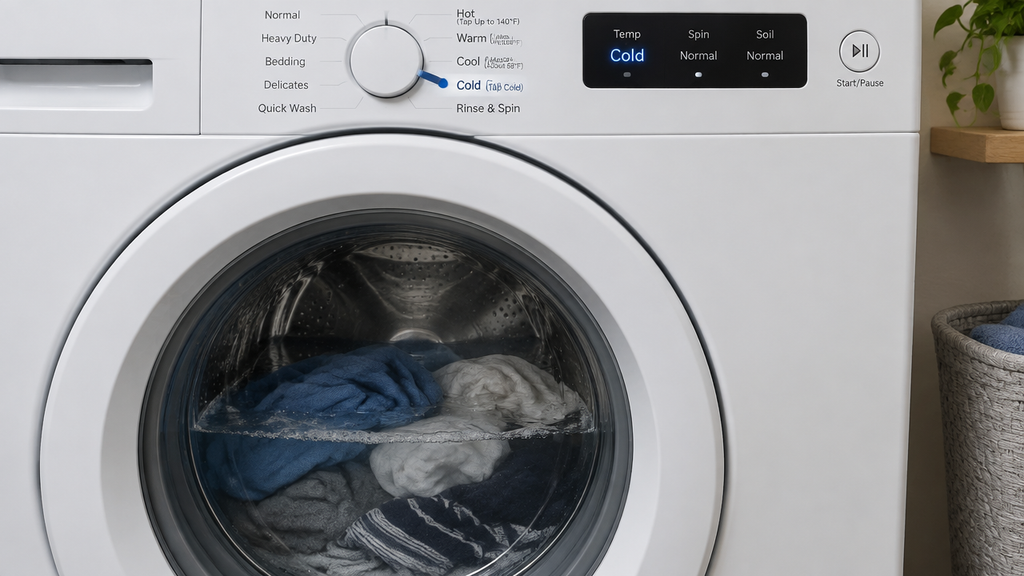
Heating water is one of the biggest energy expenses associated with washing clothes.
ENERGY STAR reports that water heating accounts for about 90% of the energy used by a clothes washer. For most everyday loads, washing in cold water can significantly reduce energy consumption.
Cold water can be an excellent choice for:
- T-shirts
- Jeans
- Everyday clothing
- Most colors
- Lightly soiled clothing
- Delicates
- Many athletic clothes
Hot or warm water may still be appropriate for certain heavily soiled items or loads where the care label recommends it.
Money-saving tip: Choose a detergent formulated to work effectively in cold water.
3. Measure Your Laundry Detergent
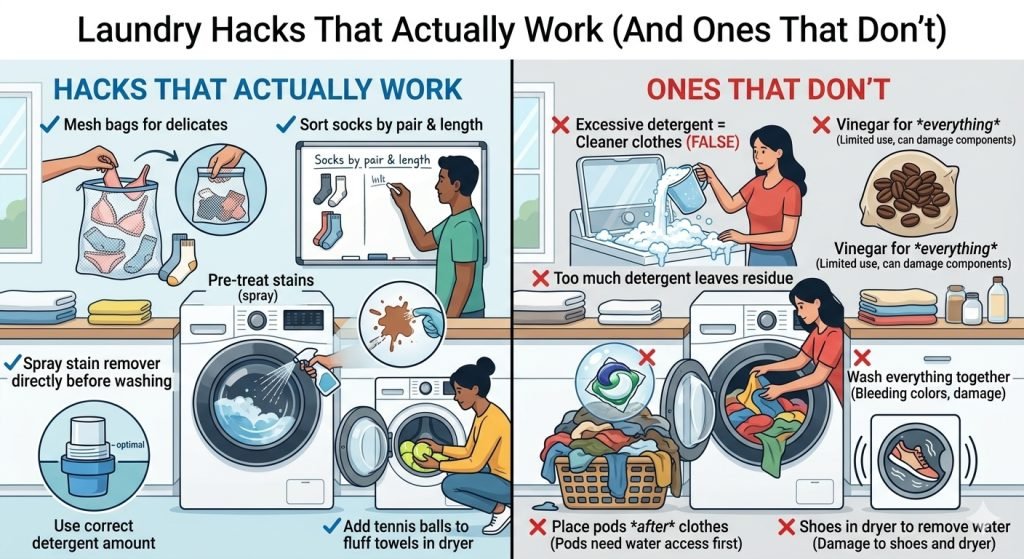
More detergent does not necessarily mean cleaner clothes.
Overusing detergent can waste money and may leave residue on clothing. Excessive suds can also make rinsing more difficult.
Instead of automatically filling the detergent cap to the top, follow the manufacturer’s recommended dosage based on:
- Load size
- Soil level
- Water conditions
- Detergent concentration
- Washer type
If you’re using a high-efficiency washer, make sure you’re using the appropriate HE detergent when required.
A simple savings strategy
If you currently use more detergent than necessary, reducing your usage can make the same bottle last significantly longer.
That’s an easy monthly expense to reduce without changing how often you wash.
4. Don’t Run the Dryer Longer Than Necessary
The dryer can be one of the more expensive parts of the laundry process because it uses substantial energy to remove moisture from clothing.
One of the simplest ways to save is to avoid over-drying.
Use an automatic or moisture-sensing cycle if your dryer has one. These settings can stop the machine when clothes reach the appropriate dryness level instead of continuing to run for a preset amount of time.
Over-drying can also contribute to:
- Shrinking
- Fabric damage
- Fading
- Excessive wear
- Higher energy costs
The U.S. National Park Service recommends avoiding over-drying clothes. If a machine has a moisture sensor, use it.
5. Clean the Dryer Lint Filter Every Time
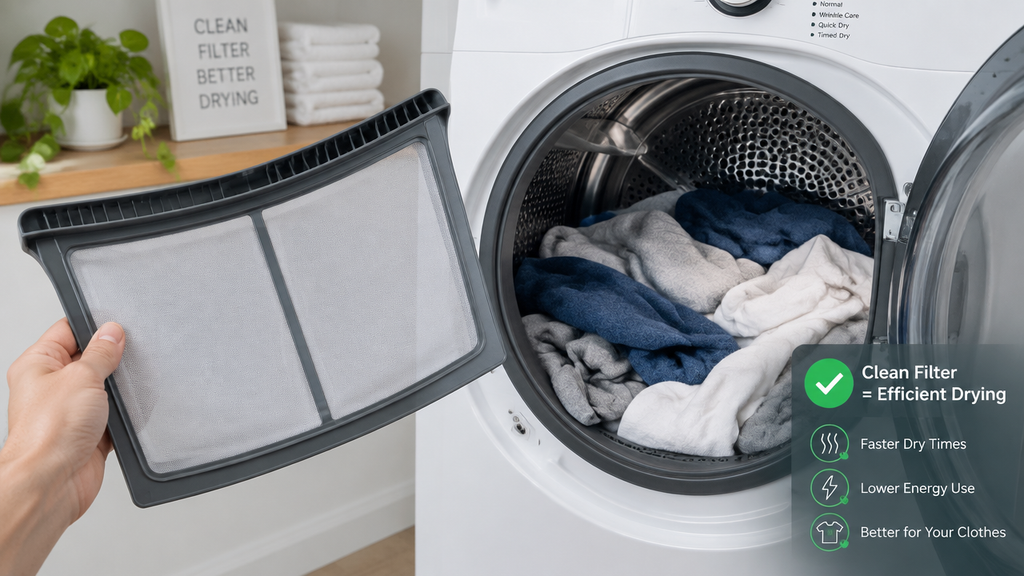
This tiny maintenance task can make a difference.
Clean the dryer lint screen before or after every load, depending on your machine’s instructions.
A clean filter helps maintain airflow, while accumulated lint can make drying less efficient.
The National Park Service and multiple energy-efficiency organizations recommend cleaning the lint screen after every dryer load.
Think of it this way:
Better airflow → better drying performance → less unnecessary dryer time.
It also has an important safety benefit because lint accumulation can increase fire risk.
6. Use Your Washer’s High-Speed Spin Cycle
If your washing machine offers different spin speeds, a higher-speed spin can remove more water before clothes enter the dryer.
That’s important because your dryer doesn’t have to work as hard to remove water that the washer has already extracted.
The Montana Department of Environmental Quality recommends using a high-speed spin option because extracting more water during washing can reduce drying energy requirements.
Just make sure you’re following the care instructions for delicate fabrics.
7. Air-Dry Clothes When Practical
The cheapest dryer is sometimes no dryer at all.
When weather and space permit, consider:
- Outdoor clotheslines
- Drying racks
- Indoor drying racks
- Hanging shirts on hangers
- Air-drying delicate garments
Air-drying eliminates the energy required to operate a powered dryer.
It can also be gentler on certain fabrics and help extend the life of clothing.
As an added bonus, sunlight is free.
8. Choose an Energy-Efficient Washing Machine
If you’re replacing an older washer, look for an ENERGY STAR-certified model.
According to ENERGY STAR, certified clothes washers use approximately:
- 20% less energy
- 30% less water
than standard washers. ENERGY STAR also estimates approximately $550 in savings over the lifetime of a certified washer.
ENERGY STAR-certified front-load washers can provide even greater efficiency compared with traditional top-load agitator models.
When comparing machines, don’t look only at the purchase price. Consider the total cost of ownership, including water, electricity, maintenance, and expected lifespan.
9. Choose Efficient Dryers When Replacing Your Dryer
If you’re purchasing a new dryer, efficiency matters here too.
ENERGY STAR reports that certified clothes dryers use approximately 20% less energy than standard models.
Heat-pump dryers can offer even greater efficiency. ENERGY STAR says certified heat-pump dryers use around 70% less energy than conventional dryers and can save more than $500 in electricity costs over the product’s lifetime.
The initial purchase price isn’t the only number to consider. A more efficient appliance may cost less to operate year after year.
10. Avoid Washing Clothes That Aren’t Actually Dirty
Not every item needs to go directly into the laundry basket after one use.
Obviously, underwear, socks, workout clothes, heavily soiled clothing, and items exposed to sweat or odors generally need frequent washing.
But some outerwear and lightly worn garments may be worn more than once when appropriate.
Washing clothes unnecessarily can:
- Increase detergent costs
- Increase water usage
- Increase energy consumption
- Increase dryer usage
- Accelerate fabric wear
The fewer appropriate loads you wash, the less you spend.
11. Take Care of Your Clothes
One of the most overlooked ways to save money on laundry is to make your clothes last longer.
Laundry doesn’t just cost money because of the washing itself. It can also contribute to clothing replacement costs.
Follow care labels and use appropriate settings for the fabric.
For example:
- Wash delicate items gently.
- Turn dark clothing inside out when appropriate.
- Avoid unnecessarily hot water.
- Don’t over-dry garments.
- Use the correct cycle.
- Remove clothing promptly after washing and drying.
If you extend the useful life of a $30, $50, or $100 garment, you’re effectively saving money beyond your monthly utility bill.
12. Stop Using More Laundry Products Than You Need
Laundry aisles are filled with products designed to make clothes smell, feel, or look different.
But you don’t necessarily need every product for every load.
Consider whether you really need:
- Dryer sheets
- Scent boosters
- Multiple stain removers
- Fabric softener
- Specialty detergents
- Extra rinse products
This doesn’t mean you have to eliminate products you enjoy. Instead, use them intentionally rather than automatically.
A smaller laundry-product bill can make a noticeable difference over 12 months.
13. Compare the Cost of Doing Laundry at Home vs. a Laundromat
If you have a small residential washer and dryer, doing laundry at home isn’t automatically the cheapest option.
Consider the total cost:
Home laundry cost = water + electricity/gas + detergent + appliance maintenance + equipment ownership + your time
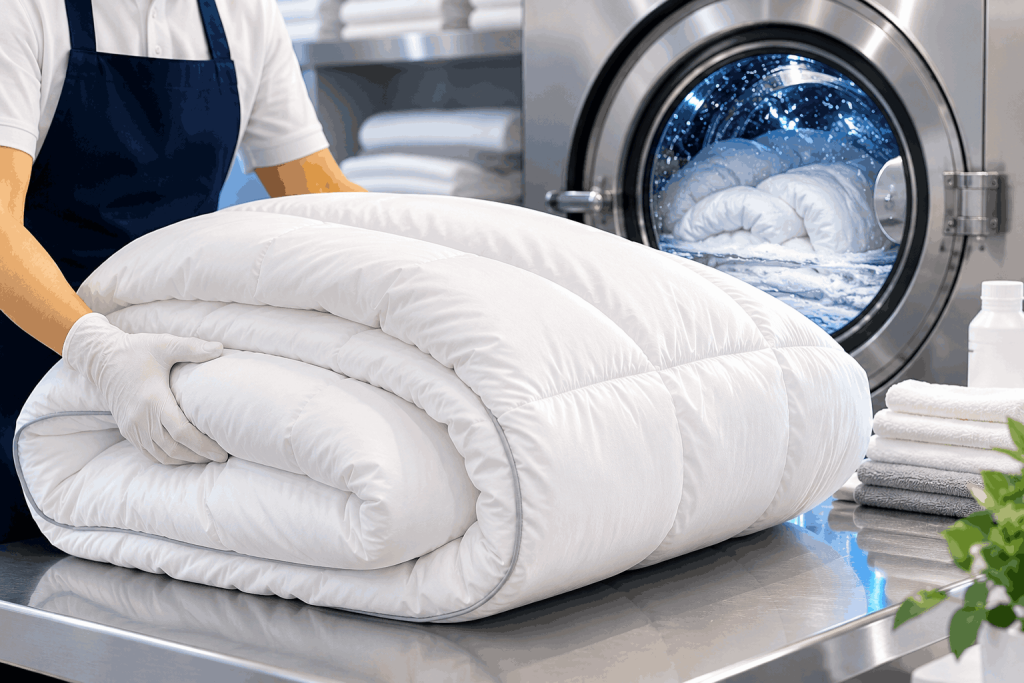
For larger loads, bulky bedding, comforters, towels, or large family laundry piles, a commercial laundromat may be more practical.
Commercial machines are designed to handle larger loads, which can help reduce the number of cycles required.
For Wayne-area residents, Tubs and Tumblers provides a convenient option for customers who need access to commercial laundry equipment as well as laundry service options.
14. Consider Wash-Dry-Fold When Your Time Has Value

Saving money isn’t always about spending the absolute fewest dollars.
Your time has value too.
Think about everything involved in doing several loads of laundry:
- Sorting
- Washing
- Moving clothes to the dryer
- Waiting for cycles
- Folding
- Hanging
- Putting everything away
If you’re spending several hours each week handling laundry, wash-dry-fold service can give you some of that time back.
At Tubs and Tumblers, customers in Wayne and surrounding communities can use laundry services when they want to spend less time dealing with laundry.
For some busy households, parents, seniors, professionals, and families, paying for laundry service can be less about “spending more” and more about buying back valuable time.
15. Use Large-Capacity Machines for Large Loads
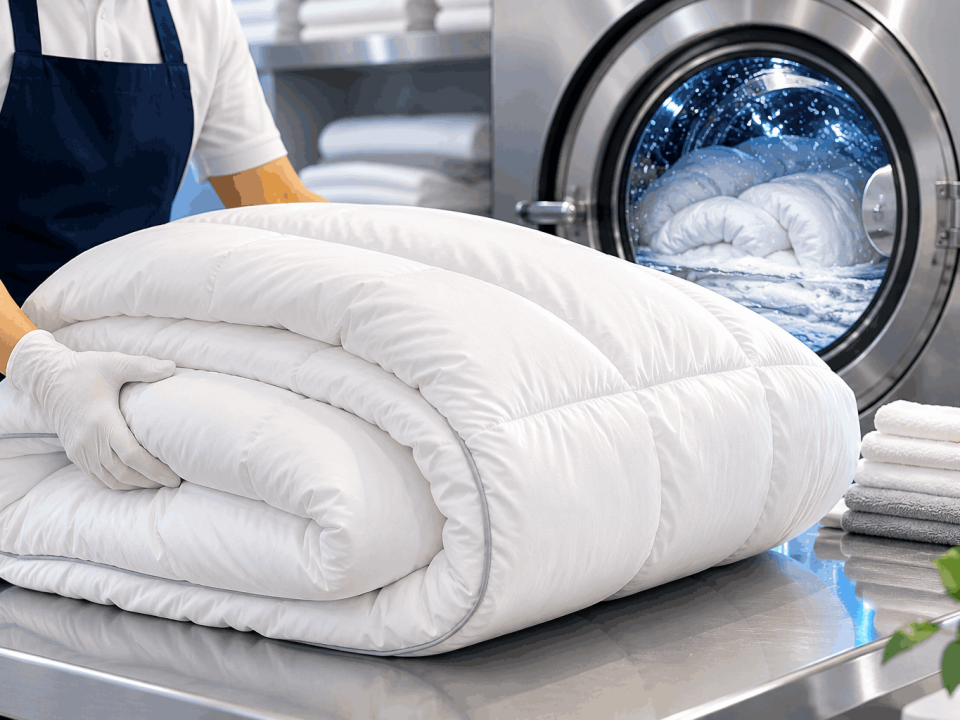
If you’re washing blankets, comforters, towels, or several days’ worth of family laundry, using an appropriately sized commercial machine can be more efficient than forcing bulky items into a small residential washer.
Large machines allow items to move freely and can reduce the number of cycles needed.
This is especially useful for:
- King-size comforters
- Queen-size comforters
- Large blankets
- Towels
- Bedding
- Large family laundry loads
A laundromat can be particularly convenient when your home machine simply isn’t large enough for the job.
Laundry Savings: The Numbers Tell the Story
Here are several useful statistics from ENERGY STAR that demonstrate why efficiency matters:
| Laundry Statistic | Why It Matters |
|---|---|
| 300 loads per year | The average American family washes about this many loads annually. (ENERGY STAR) |
| 20% less energy | ENERGY STAR-certified washers use about 20% less energy than standard models. (ENERGY STAR) |
| 30% less water | ENERGY STAR-certified washers use about 30% less water. (ENERGY STAR) |
| About $550 lifetime savings | ENERGY STAR estimates this savings for a certified clothes washer. (ENERGY STAR) |
| 20% less dryer energy | ENERGY STAR-certified dryers use approximately 20% less energy than standard dryers. (ENERGY STAR) |
| Around 70% less energy | ENERGY STAR says heat-pump dryers can use around 70% less energy than conventional dryers. (ENERGY STAR) |
These numbers show why laundry efficiency isn’t just an environmental issue. It’s a household-budget issue.
Laundry Savings: The Numbers Tell the Story
Here are several useful statistics from ENERGY STAR that demonstrate why efficiency matters:
| Laundry Statistic | Why It Matters |
|---|---|
| 300 loads per year | The average American family washes about this many loads annually. |
| 20% less energy | ENERGY STAR-certified washers use about 20% less energy than standard models. |
| 30% less water | ENERGY STAR-certified washers use about 30% less water. |
| About $550 lifetime savings | ENERGY STAR estimates this savings for a certified clothes washer. |
| 20% less dryer energy | ENERGY STAR-certified dryers use approximately 20% less energy than standard dryers. |
| Around 70% less energy | ENERGY STAR says heat-pump dryers can use around 70% less energy than conventional dryers. |
These numbers show why laundry efficiency isn’t just an environmental issue. It’s a household-budget issue.
How Much Can You Actually Save?
Your savings will depend on your washer, dryer, utility rates, laundry frequency, household size, and whether you use a laundromat.
Instead of promising a specific dollar amount, track your actual laundry expenses for one month.
Add:
- Laundry detergent
- Fabric softener
- Dryer sheets
- Water/sewer costs
- Electricity or gas
- Laundromat spending
- Clothing damaged or replaced because of poor washing practices
Then try implementing several changes for the next 30 days.
For example:
Month 1: Track everything.
Month 2: Wash fuller loads and switch appropriate loads to cold water.
Month 3: Improve drying efficiency and reduce unnecessary product usage.
You can then compare your spending.
This gives you a much more accurate picture than relying on a generic “average laundry cost.”
Your Monthly Laundry Savings Checklist
Use this quick checklist to keep your laundry expenses under control:
☐ Wash full loads when practical
☐ Use cold water for appropriate loads
☐ Measure detergent
☐ Don’t over-dry clothes
☐ Clean the dryer lint filter every load
☐ Use high-speed spin when appropriate
☐ Air-dry clothes when practical
☐ Follow clothing care labels
☐ Avoid washing lightly worn clothes unnecessarily
☐ Compare home laundry and laundromat costs
☐ Use large machines for bulky items
☐ Consider ENERGY STAR appliances when replacing equipment
☐ Consider wash-dry-fold service when your time is limited
Save Money Without Sacrificing Clean Clothes
Saving money on laundry doesn’t require extreme changes.
In fact, some of the best strategies cost absolutely nothing.
Wash full loads. Use cold water when appropriate. Measure detergent. Clean your lint filter. Avoid over-drying. Air-dry when practical. Take care of your clothes.
And when your laundry pile becomes too large to manage, consider whether a laundromat or professional wash-dry-fold service makes more sense for your schedule.
For families and busy households in Wayne, Canton, Westland, Romulus, Belleville, and Van Buren Township, Tubs and Tumblers can help take some of the work out of laundry.
Instead of spending your free time sorting, washing, drying, and folding, you can spend that time on the things that matter more.
Ready to make laundry easier?
Visit Tubs and Tumblers for convenient laundry solutions in Wayne, MI, and surrounding communities. Whether you need commercial-sized machines, wash-dry-fold service, or pickup and delivery laundry service, there’s a convenient option for your laundry needs
Frequently Asked Questions
The easiest changes are to wash full loads, use cold water when appropriate, measure detergent correctly, and avoid unnecessary dryer time. These strategies can reduce water, energy, detergent, and equipment usage.
Does washing clothes in cold water really save money?
Yes. ENERGY STAR states that approximately 90% of a washer’s energy use goes toward heating water, so using cold water for appropriate loads can reduce energy consumption.
Is it cheaper to do laundry at home or at a laundromat?
It depends. Compare your home’s water, energy, detergent, appliance ownership and maintenance costs with the cost of using commercial machines. For large or bulky loads, a laundromat’s larger machines may provide greater convenience and efficiency.
Does using more detergent make clothes cleaner?
Not necessarily. Follow the detergent manufacturer’s recommended amount for the load size and soil level. Excess detergent can leave residue and waste money.
How often should I clean my dryer lint filter?
For most dryers, clean the lint screen after every load. This helps maintain airflow and drying efficiency and is an important dryer-safety practice.
Are ENERGY STAR washers worth the money?
They can be. ENERGY STAR says certified washers use about 20% less energy and 30% less water than standard models and estimates approximately $550 in lifetime savings for a certified washer.
Can a laundromat actually help me save money?
It can, particularly when you need to wash large amounts of laundry or bulky items. Commercial machines can handle larger loads, potentially reducing the number of cycles required. You should compare the cost with your home’s total laundry expenses and the value of your time.