Revolutionize Your Laundry Day: The Pickup and Delivery Laundry Service Solution
April 13, 2024
How to Wash a Comforter: Step-by-Step Instructions for Fresh Bedding
April 26, 2024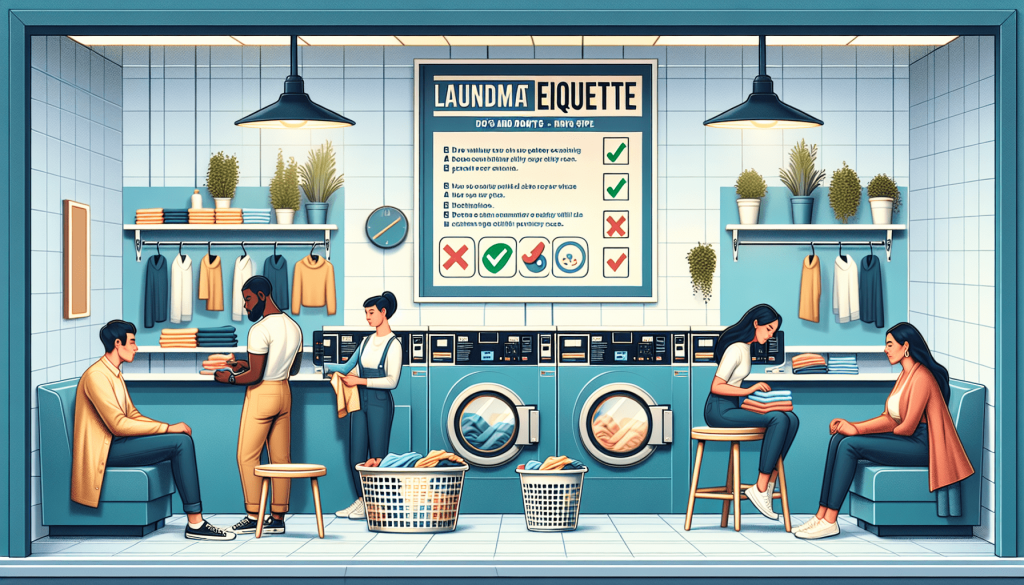
Whether you visit a laundromat every week or only when your home washer breaks down, sharing laundry facilities with other people requires a little consideration. A busy laundromat can have dozens of customers washing, drying, folding, and moving laundry at the same time.
Following basic laundromat etiquette helps everyone get their laundry done efficiently while keeping the facility clean, safe, and comfortable.
Good laundromat etiquette isn’t complicated. In most cases, it comes down to three things: respect other people’s time, respect their laundry, and respect the facility.
Why Laundromat Etiquette Matters
Laundry is a regular part of life for millions of Americans. According to the American Cleaning Institute’s 2026 National Laundry Day survey, 43% of U.S. households report doing one to three loads of laundry per week, while another 37% do four to six loads. Ten percent report doing seven to ten loads weekly.
That means laundry facilities can become especially busy during evenings, weekends, and other peak periods.
Commercial laundromats also allow customers to wash multiple loads simultaneously. This makes them convenient, but it also means washers, dryers, folding tables, carts, and other shared resources need to be used thoughtfully.
A few basic courtesy rules can prevent unnecessary conflicts and keep laundry moving.
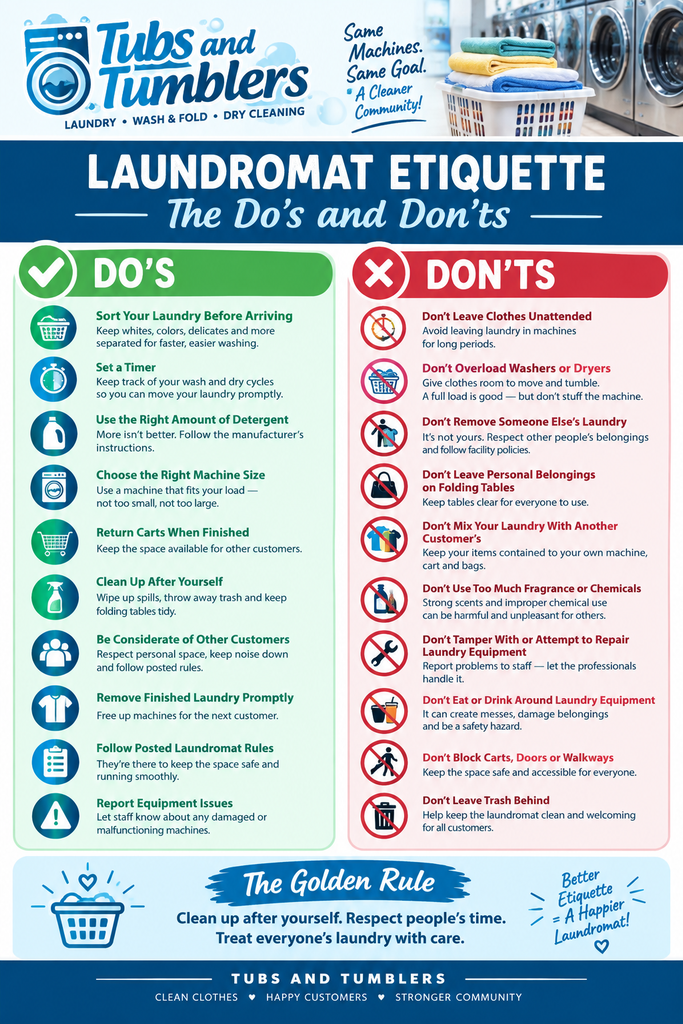
The Do’s of Laundromat Etiquette
1. Do Bring Your Laundry Prepared
Before arriving at the laundromat, take a few minutes to prepare your laundry.
Sort clothing into appropriate categories such as:
- Whites
- Colors
- Dark clothing
- Towels
- Bedding
- Delicates
- Heavily soiled items
Pre-sorting can save time once you arrive.
The American Cleaning Institute reported in 2026 that 54% of people who do laundry at home pre-sort their clothing, while 48% pretreat stains. Those habits can be just as useful when you’re doing laundry at a laundromat.
Preparing your laundry ahead of time means you can get your loads started faster and avoid tying up machines while sorting clothes.
Expert tip: Check pockets before leaving home. Coins, pens, lip balm, tissues, and other objects can create problems during washing or drying
2. Do Choose the Right-Sized Machine
One of the advantages of a laundromat is having access to machines in different capacities.
Use a machine that fits the size of your load.
For example, don’t put a small handful of clothing into an oversized washer if a smaller machine is available. At the same time, don’t cram a large load into a machine that is too small.
Overloading can prevent clothing from moving freely through the wash cycle and may result in less effective cleaning.
Large-capacity washers are particularly useful for:
- Comforters
- Blankets
- Large family loads
- Towels
- Bedding
- Bulky clothing
Using the appropriate machine helps you get better results and can make machines available more quickly for other customers.
3. Do Use the Correct Amount of Detergent
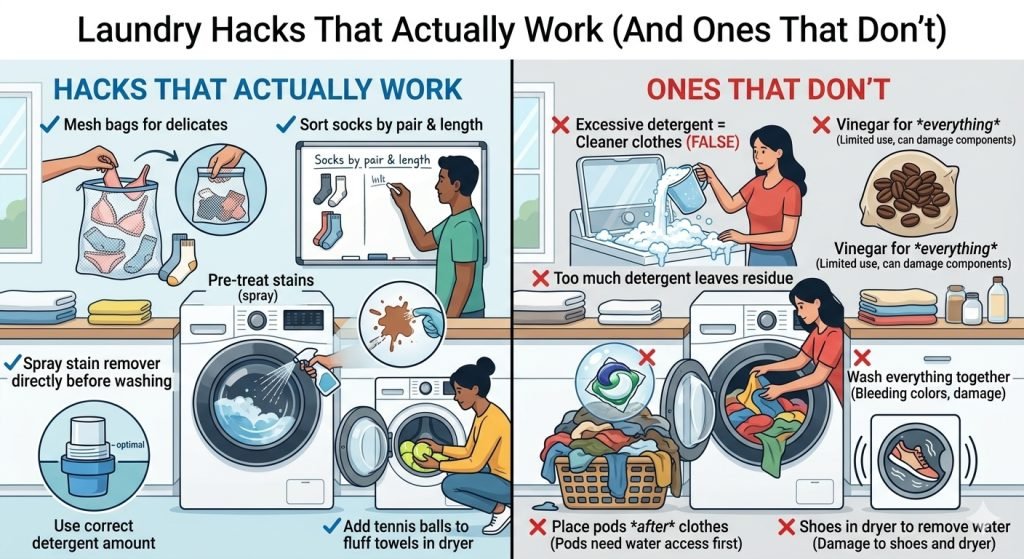
More detergent doesn’t necessarily mean cleaner clothes.
In fact, excessive detergent can leave residue behind and may require additional rinsing.
Follow the detergent manufacturer’s instructions and pay attention to the type of washer you’re using.
If you’re using detergent pods, handle them according to the package directions. Never throw loose detergent into a laundromat sink or leave spills behind.
Remember: Detergent is designed to clean laundry—not the inside of the machine.
4. Do Remove Your Laundry Promptly
One of the most important rules of laundromat etiquette is simple:
Don’t leave your finished laundry sitting in a machine for an extended period.
If you know your wash cycle is ending soon, try to be nearby.
Promptly moving your clothes to the dryer helps keep washers available for other customers.
The same rule applies to dryers. Once your clothes are dry, remove them so someone else can use the machine.
A busy laundromat works best when everyone keeps the machines moving.
5. Do Keep Track of Your Laundry
Keep an eye on your belongings while you’re at the laundromat.
It’s a good idea to:
- Set a phone timer
- Keep your laundry together
- Label laundry bags when appropriate
- Check pockets
- Count or organize specialty items
If you’re washing multiple loads, keeping track of which load is in which machine can save you from confusion later.
6. Do Clean Up After Yourself
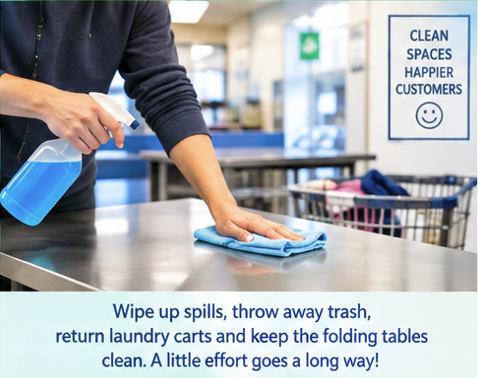
This may be the simplest rule—and one of the most important.
- If you spill detergent, fabric softener, or another laundry product, clean it up or notify staff.
- After using a folding table, throw away trash and return your belongings to your laundry bag or basket.
- If you use a laundry cart, return it to the designated location when you’re finished.
A clean laundromat benefits everyone.
7. Do Be Considerate of Other Customers
Remember that everyone has somewhere to be.
Some customers may be washing clothes before work. Others may be handling a family’s laundry, cleaning bedding, or trying to finish several loads before the laundromat gets busy.
Being courteous means:
- Giving people personal space
- Keeping conversations at a reasonable volume
- Avoiding unnecessary machine monopolization
- Keeping children supervised
- Following posted facility rules
- Treating employees and other customers respectfully
A little courtesy can make laundry day much less stressful to you and to others.
The Don’ts of Laundromat Etiquette
1. Don’t Leave Your Clothes in a Machine for a Long Time
This is one of the biggest laundromat etiquette mistakes.
If your wash cycle has finished and another customer needs the machine, leaving your clothing inside can create frustration.
Whenever possible, stay nearby or set a timer on your phone.
If you know you won’t be able to return promptly, consider choosing a less busy time to do your laundry.
2. Don’t Remove Someone Else’s Laundry Without Good Reason
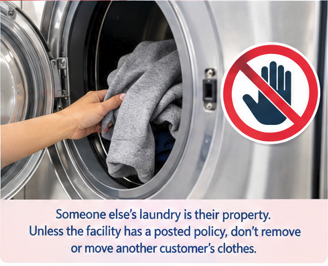
Customers generally expect their laundry to remain undisturbed.
If someone’s clothes are sitting in a machine, don’t immediately assume you’re entitled to remove them.
If the facility has a posted policy regarding completed loads, follow that policy.
When in doubt, ask an employee.
This is especially important when dealing with someone’s personal clothing, bedding, or other belongings.
3. Don’t Overload Washers or Dryers
There’s an important difference between using a full load and overloading a machine.
ENERGY STAR recommends washing full loads when practical because a washer generally uses about the same amount of energy and water during a cycle regardless of how full it is. However, full does not mean packed to the point where clothes can’t move freely.
When using a laundromat’s commercial washers and dryers, choose a machine that’s appropriately sized for your load. If you have a large amount of laundry, it’s often better to use a larger-capacity machine rather than cramming everything into a smaller one.
How to Tell If You’re Overloading
A washer or dryer may be overloaded if:
- Clothes are packed tightly with little room to move.
- You have to force the door closed.
- Laundry is tightly compressed against the drum.
- Items don’t have enough room to tumble freely.
- The machine is filled beyond the manufacturer’s recommended capacity.
Overloading can prevent water and detergent from circulating properly during washing and can restrict airflow during drying. The result may be clothes that aren’t completely clean or take much longer to dry.
The goal is to use the machine efficiently—not to fill it beyond its capacity.
When in doubt, choose the larger machine. A properly sized load gives your clothes room to move, tumble, and rinse effectively while still making efficient use of the wash cycle.
4. Don’t Mix Your Laundry With Someone Else’s
This might sound obvious, but it is worth mentioning.
Keep your laundry contained to your own machine, cart, folding area, and laundry bags.
Avoid placing personal belongings on another customer’s laundry or mixing clothing between loads.
When handling your own laundry, double-check that every item belongs to you before leaving.
5. Don’t Use Too Much Fragrance or Chemicals
Not everyone has the same preferences when it comes to laundry products.
Excessive fragrance products can be unpleasant for other customers and may be problematic for people who are sensitive to certain scents.
More importantly, never mix cleaning chemicals unless the product directions specifically say they can be combined.
Follow the manufacturer’s instructions for bleach, detergent, fabric softener, stain removers, and laundry sanitizers.
6. Don’t Use Folding Tables as Storage
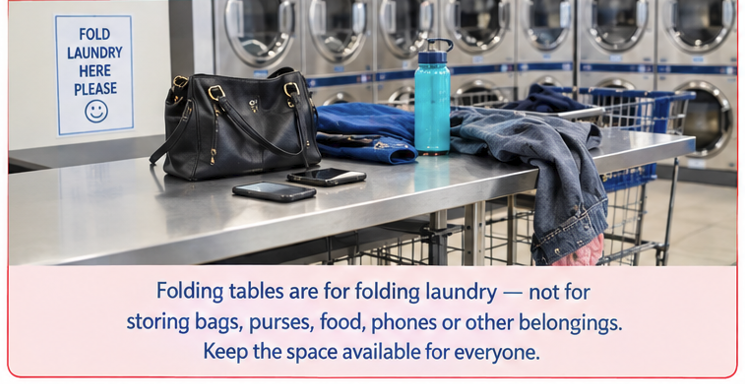
Folding tables are intended for folding laundry—not storing bags, purses, food, phones, or other belongings while you walk away.
Once your laundry is folded, move it into your basket or bag.
This keeps the workspace available for other customers.
7. Don’t Eat or Drink Around Laundry Equipment
Food and beverages don’t mix well with laundry equipment.
A spilled drink can create a mess, damage belongings, or create a slipping hazard.
Follow the laundromat’s posted rules regarding food and beverages and always clean up spills immediately.
8. Don’t Tamper With or Attempt to Repair Laundry Equipment
Never attempt to repair, open, or tamper with commercial laundry equipment.
If a washer or dryer appears to be malfunctioning, notify staff.
Similarly, report:
- Water leaks
- Electrical issues
- Strange noises
- Burning smells
- Broken doors
- Damaged carts
- Spills
- Other safety hazards
It’s much safer to let trained personnel address equipment problems.
Laundromat Etiquette for Busy Days
Laundromats are often busiest during evenings and weekends.
If you’re visiting during a peak period, plan ahead.
Consider bringing:
- Pre-sorted laundry
- Laundry bags
- Detergent
- Dryer sheets if you use them
- Quarters or your preferred payment method
- A stain remover
- A phone charger
- A timer
Most importantly, expect that machines may be in use.
Don’t crowd other customers or repeatedly check machines while someone is still using them.
If all the machines are busy, wait patiently or consider returning at a less crowded time.
What About Large Items?
Oversized laundry requires special consideration.
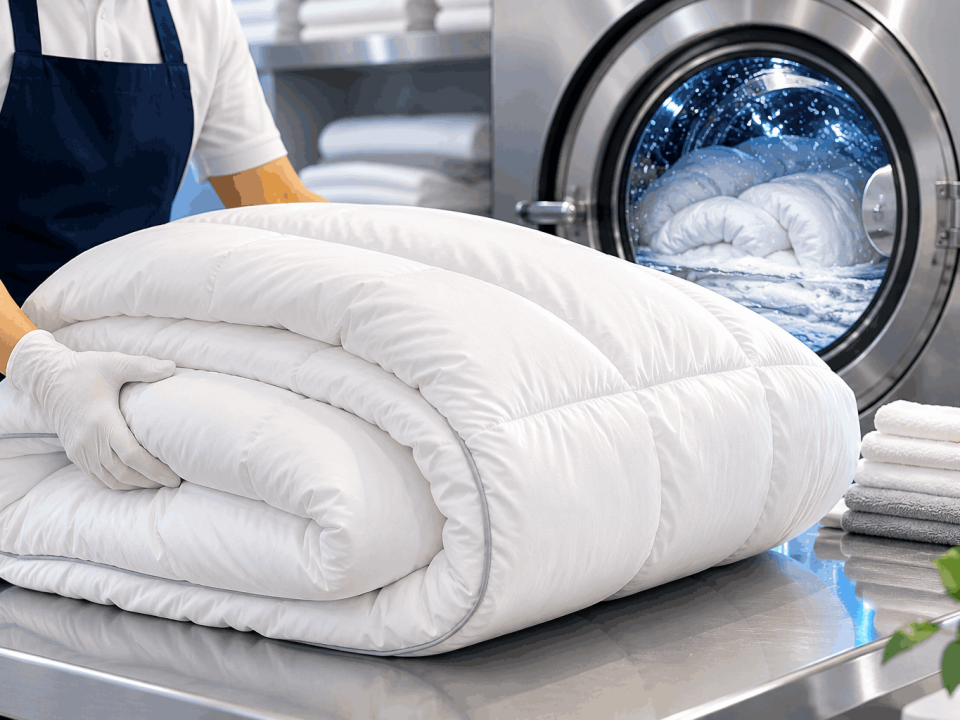
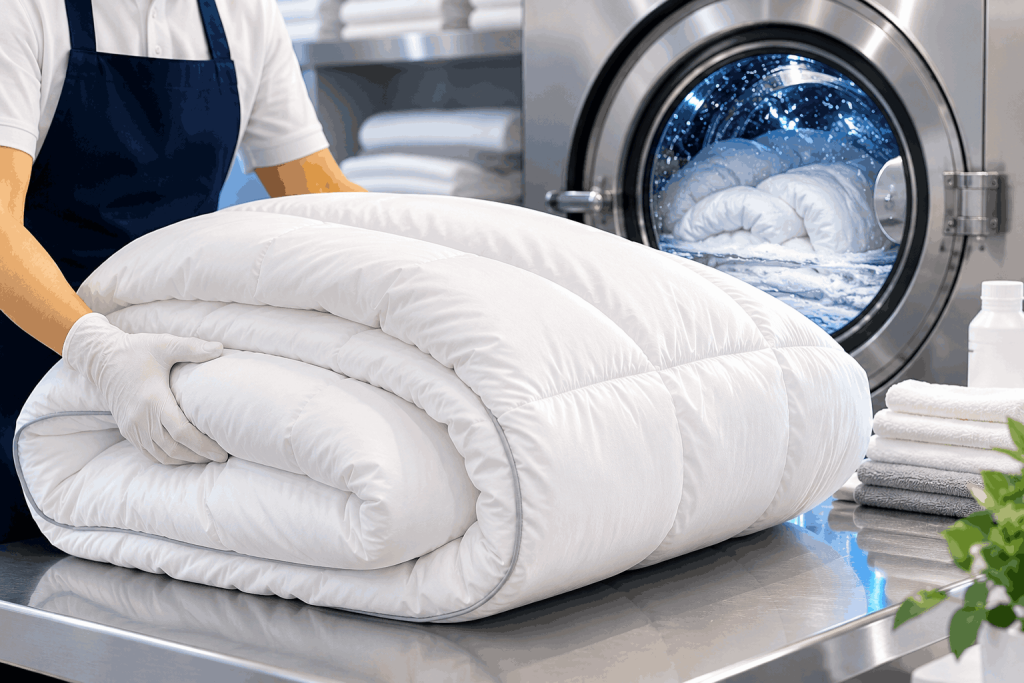
Items such as comforters, blankets, sleeping bags, and large bedding can be difficult to wash properly in a residential machine.
A commercial laundromat may offer larger-capacity equipment designed for these items.
When washing bulky items:
- Check the care label.
- Choose an appropriately sized washer.
- Don’t cram the item into a machine that’s too small.
- Use the recommended amount of detergent.
- Select the appropriate wash temperature.
- Make sure the item is thoroughly dry before storing it.
If you’re unsure which machine to use, ask the laundromat staff for assistance.
The Golden Rule of Laundromat Etiquette
There’s one rule that covers almost everything:
Treat the laundromat—and the people in it—the way you’d want to be treated.
If you wouldn’t want someone leaving their laundry in your machine for an hour, don’t do it to someone else.
If you’d want someone to clean up a detergent spill, clean up yours.
If you’d appreciate having access to an available folding table, don’t use one as a storage area.
Good etiquette is ultimately about consideration.
A Summary: To Sum it Up
Make Laundry Day Easier at Tubs and Tumblers
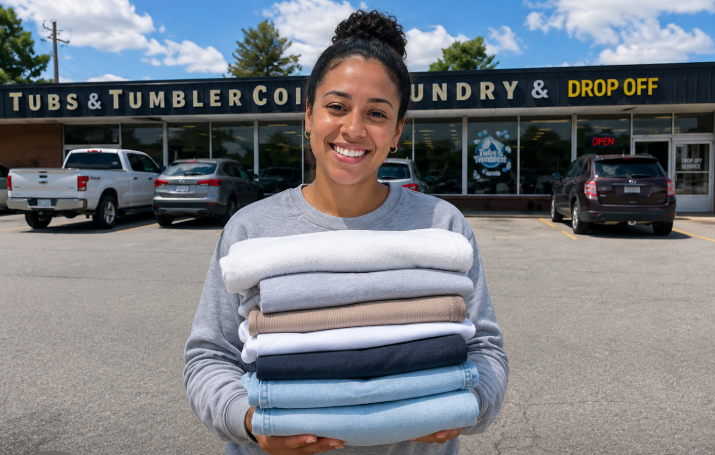
Sometimes the best laundromat etiquette is knowing when you don’t have to do all the work yourself.
For Wayne-area residents and businesses, Tubs and Tumblers offers laundry solutions designed to make laundry day easier.
Whether you need to use a laundromat for large loads, need help with wash-and-fold laundry, or simply don’t have enough time to stay on top of your family’s laundry, professional laundry services can take some of the work off your schedule.
Tubs and Tumblers serves customers in Wayne, Canton, Westland, Romulus, Belleville, and Van Buren Township.
From everyday clothing to bulky laundry, professional laundry services can be especially useful for busy families, seniors, professionals, and local businesses.
If laundry has become another item competing for your limited free time, consider letting a laundry professional handle it.
Frequently Asked Questions About Laundromat Etiquette
Is it rude to leave clothes in a laundromat washer?
Leaving clothes in a washer for a short period may happen occasionally, but it’s best to monitor your laundry and move it promptly when the cycle ends. Leaving laundry unattended for extended periods can prevent other customers from using the machine.
Can I remove someone else’s clothes from a washer?
Follow the laundromat’s posted policies. If you’re unsure, ask an employee rather than automatically removing another person’s belongings.
Should I clean the laundromat machine before using it?
Commercial laundromat equipment is cleaned and maintained by the facility, but customers should report spills, leaks, or unusual conditions to staff rather than attempting repairs themselves.
Can I use more than one washer at a time?
Yes, especially when doing multiple loads, but be considerate during busy periods. Avoid occupying excessive numbers of machines when other customers are waiting.
What’s the best way to save time at a laundromat?
Sort your laundry before arriving, bring your supplies, choose the appropriate machine sizes, use multiple machines when appropriate, and set timers so you can move laundry promptly between cycles.
What should I do if a laundromat machine isn’t working?
Don’t attempt to repair the machine yourself. Follow the facility’s instructions for reporting a problem and notify staff.
Can I wash comforters at a laundromat?
Yes. Laundromats are often a convenient option for bulky items such as comforters and blankets because commercial machines may offer larger capacities than residential washers.
Final Thoughts
A laundromat is a shared space, and good etiquette makes the experience better for everyone.
The basics are simple: prepare your laundry, choose the right machine, use products correctly, monitor your cycles, clean up after yourself, and respect other customers.
When everyone follows these simple rules, machines turn over faster, folding areas stay cleaner, and laundry day becomes much less stressful.
And if you don’t have the time—or simply don’t want to spend your free time sorting, washing, drying, and folding—professional laundry services can give you another option.
For customers in Wayne and surrounding communities, Tubs and Tumblers is here to help make laundry easier.